Rainbow Leopard
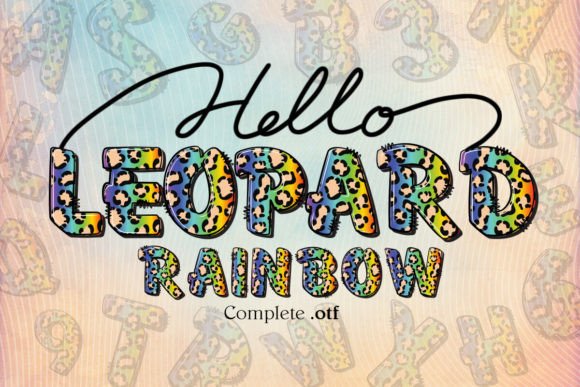
The first time I saw Rainbow Leopard, I felt a spark. It’s not just a font—it’s a mood. The letters feel bold, playful, and full of energy. There’s an immediate sense of vibrancy that makes me think of summer festivals, colorful packaging, and creative branding. It’s the kind of typeface that commands attention without being overbearing. The curves are smooth, the contrast is strong, and the overall aesthetic feels modern yet nostalgic. It’s like a digital version of hand-drawn lettering, but with a polished edge.
I immediately thought of how this could work in logo design. Rainbow Leopard has a unique personality that could make a brand stand out. It’s not the kind of font you’d use for a corporate office, but it would be perfect for a lifestyle brand, a boutique, or a creative studio. Its visual weight suggests confidence and creativity, which aligns well with brands that want to appear dynamic and expressive.
In real-life projects, Rainbow Leopard shines in areas where a display font can make a statement. For instance, in editorial design, it can serve as a headline or a pull quote that draws the eye. On posters and flyers, it adds a layer of personality that can elevate the design from ordinary to memorable. When used on product labels or packaging, it brings a sense of fun and approachability that can resonate with younger audiences or niche markets.
However, there are situations where Rainbow Leopard should be used carefully. Large headlines can sometimes lose their impact if the font isn’t balanced with surrounding text. I’ve seen cases where using it too prominently in a brand mark can create confusion or dilute the brand’s identity. It’s important to test it in black and white to ensure it still holds up in different contexts. Small-size readability is another concern—while the font looks great at larger sizes, it may struggle in tight spaces or when used for body text.
When pairing Rainbow Leopard with other fonts, the key is to find complementary styles. A serif font like Georgia or a sans serif like Helvetica can provide a nice contrast. Script or handwritten fonts might clash, but they can also create interesting combinations for certain designs. Testing it alongside different styles is essential to maintain visual harmony and ensure the message remains clear.
In web design, Rainbow Leopard can add a touch of flair to headers or social media graphics. But it’s important to consider how it renders on different screens and devices. Some browsers may not handle color fonts as smoothly, so checking the performance across platforms is a must. For digital products like Canva templates or Cricut projects, the font’s versatility makes it a valuable asset. It’s especially useful for creating printable designs, such as greeting cards or promotional materials, where a vibrant and eye-catching look is desired.
One thing I noticed is that Rainbow Leopard affects audience trust in subtle ways. Its playful nature can make a brand feel more approachable, but it might not convey the same level of professionalism as a more traditional font. That said, it’s not a deal-breaker—it’s all about context. If the brand’s voice is fun and energetic, Rainbow Leopard can enhance that perception. If the tone is more serious, it might need to be paired carefully or used sparingly.
For designers working on brand identity, Rainbow Leopard offers both opportunities and challenges. It can help differentiate a brand in a crowded market, but it requires thoughtful implementation. Using it in supporting text or decorative accents can keep the design balanced while still making an impact. In logo design, it’s best to pair it with simpler elements to avoid overwhelming the viewer.
I’ve also tested Rainbow Leopard in various environments, including print and digital. It performs well in print, especially on high-quality paper, where its colors and textures come to life. However, in digital formats, especially those with limited color support, it may not render as intended. Always confirm commercial licensing before using it for client or business purposes. It’s a premium font, and ensuring proper rights is crucial for professional work.
Overall, Rainbow Leopard is a versatile and expressive font that can elevate a wide range of design projects. Whether it’s for packaging, social media graphics, or editorial design, it has the potential to make a strong visual statement. With careful application and thoughtful pairing, it can become a valuable tool in a designer’s toolkit.